Grand Unified Theory of Heaviness

Short answer — tritones and distortion

Longer answer — many opinions within the heavy metal community

The Unholy Trinity of Protometal — Led Zeppelin, Black Sabbath, Deep Purple (though nowadays people consider Led Zeppelin to be “classic rock”)

Heavy Metal music was written during the 60s to late 70s — “Much of the development after that, while being both heavy and metal, isn’t considered Heavy Metal” by musicians in the genre. Taxonomy!

Riff based featuring tritones, half steps, flat 9s, flat 6s, “and other dissonant and atonal gestures”

“Good riffs can sound heavy even if you play them acoustic” — not just a matter of tuning everything down. But, “though dissonance is the seed of heaviness, it’s not the whole story”

This is an especially good episode, I hope to come back to it and take more notes!

Chromatic Neighbor Embellishment

Chromatic Neighbor Embellishment — Could be the title of a track on a Prog album?

embellishments — add color or sense of motion to main note

Neighbor motion — goes to one of the notes on either side, then comes back

chromatic neighbor motion — moves a semitone. Might not be in the key

Chromatic embellishments of cheerful major key melodies are part of the musical identity of Mario games

not just melody but also harmony and bass notes move like this

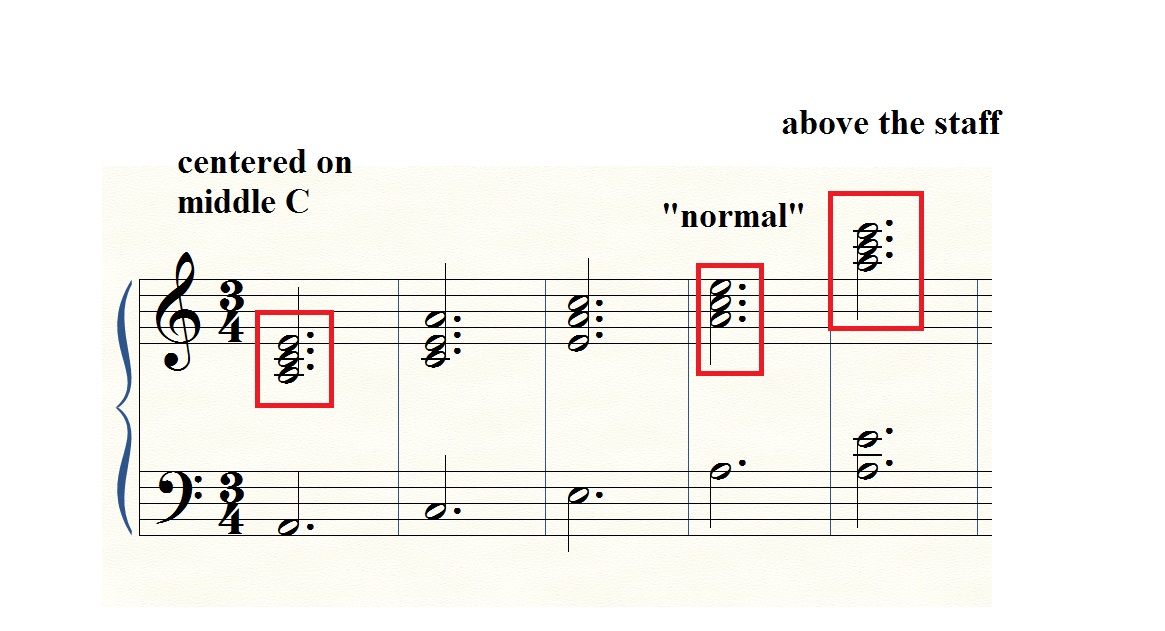
Note — these early games had limited polyphony because of sound board. Spells out a chord with root, 5th, and melody note is the 3rd of the chord. If revoiced, the interval between the top notes would be a third. Koji Kondo in interviews said he wanted to use interval of a 6th because it sounds fuller. So — three note spread voice chord, with root on the bottom — means the 3rd has to be on top.

Melody E, Eb, F, E is called Double Neighbor Embellishment; later there’s a chromatic passing note in a run


Marching forth

Yes it’s March 5th already. But I have been Marching Forth.

I’ve been ordering parts for my new PC one item at a time, in case Amazon delivery had a problem. In the past I’ve ordered multiple items from Amazon, and if one of the group doesn’t arrive and everything else does, it’s complicated to clear up. As a result of the daily packages it’s been like the 12 days of Christmas around here. (On the 1st day of Christmas my true love gave to me, 64 gig of DDR5…)

I still haven’t ordered the storage — solid state drives (what types? my motherboard wants 2 different kinds), hard disk drive (“spinner disk”), external storage for backup? Part of me wants to get a NAS* “because then I could share projects between computers”. My computer tech suggests not buying things until it’s clear that I need them. Ok, yeah, but…having the fancier version makes me feel important, like I’m taking my work seriously, like my work IS important. It’s motivating and empowering. On the other hand, I don’t want to irritate my computer tech.

(*) There was a video recently where the narrator was explaining why he didn’t need an ass, there wasn’t really a situation where he would use an ass, he might get an ass later. At least, that’s what it sounded like he was saying. 😉 So the question is, do I need an ass now, or should I wait, maybe get an ass when they go on sale?

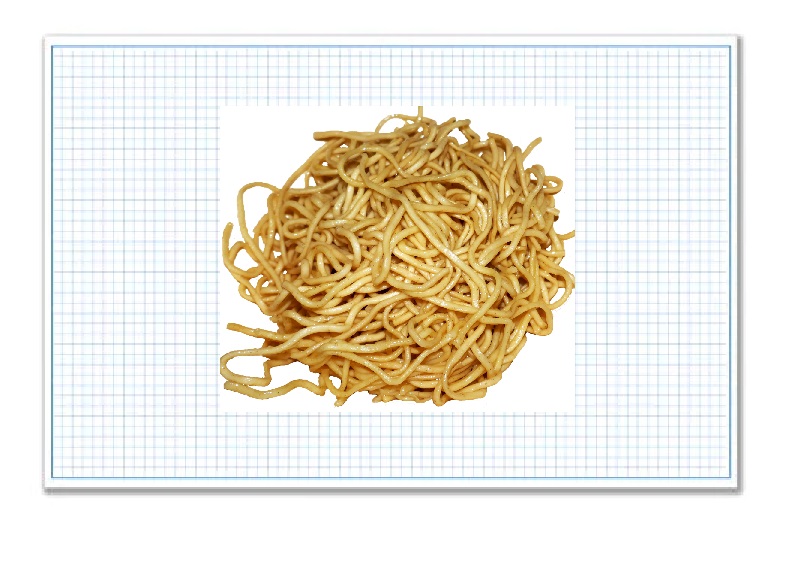
Meanwhile — the Morning Noodles —

I haven’t photographed and stored away the last 3 noodles. There have been Morning Disturbances that interfered with the Morning Noodles. For example, one morning I got a phone call from Matt the Concrete guy, could he come by in 20 min?

For all 3 of these days I’ve played experimental chords at the piano and have written down the chord spellings, but I did not finish filling up the pages. Today my other family members went out to eat and I had the house to myself for an hour. Instead of finishing the Noodle page, I played the prologue of my planet suite at full volume.

At some point I’m going to sit down with each page and translate the chord spellings into music notation. I guess that means right now I have 3 servings of leftover Noodles.

“It’s OK for you to try that”

Like, most of the time when someone wants to go do something creatively, wants to do something where they want to try something, maybe wants to change career, they just need someone else to say, “Do it”.

That’s it! That’s all they need. They just need someone to say “It’s OK for you to try that. Go do it”.

So…if you’re waiting…stop it. Go do it. Seriously!

If I didn’t go do it, I wouldn’t be here. If I didn’t go do it, I wouldn’t have my own studio now. If I didn’t go do it, I wouldn’t know any of you.

So go do it. Stop waiting. Don’t wait. It’s not worth it.


Do the Thing that is Not Enough

Any time your mind tells you “it won’t be good enough”, what is your mind actually trying to do? It’s trying to protect you from pain. Oh, I shouldn’t study for this test. Why? Because it won’t be enough. You won’t get an A.

But then you ask yourself, but wait, what is my mind trying to protect me from? It’s trying to protect me from a B. Because I want an A. Because if I get a B, or a C, or an F, and I TRIED for an A, I’m going to be so devastated. So your mind tells you it won’t be enough.
“It won’t be enough” is a trick that the mind plays to reduce your desire to act. So if you really want to fix your life, the most important thing to do is to do things that are not enough.
Every single one that I have taught to do things that are not enough has substantially improved their life.

If you can start doing the insufficient, your life will change.

“OMG exercising for 20 minutes is not going to be enough, so I might as well not do it.” You’re right, if you wanna get at whatever the fuck your goal is, you need to exercise for 90 minutes.
But do the thing that is not enough. See, that’s the problem, we all look for the thing that will work. We should start doing the things that won’t be enough. Because the real success comes not from the thing working or not working, the real success comes from the doing.


Morning Noodle Report

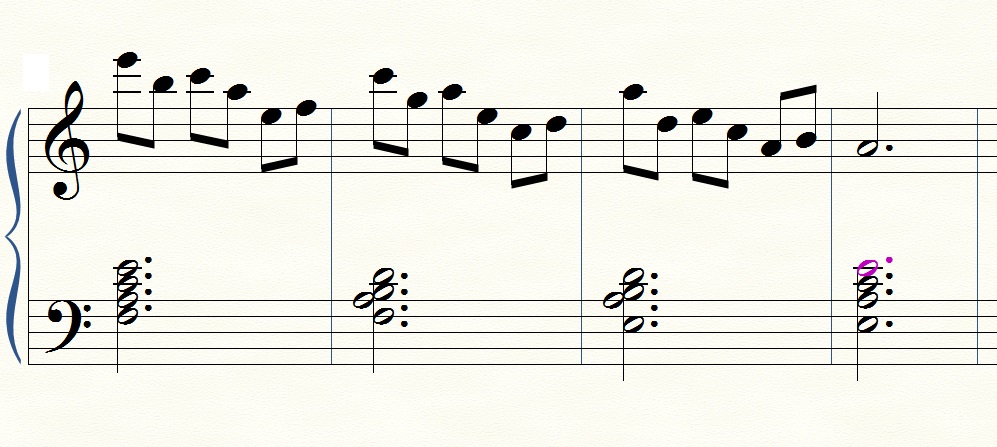
I would love to be able to play arpeggios all up and down the keyboard. I can imagine how it would sound (“audiate”), but my hands can’t do it gracefully, and I certainly couldn’t read it! After doing the Morning Noodle I wrote some of it out in Finale. When I had written it by hand, the notes on ledger lines looked horrifying, like Terra Incognito. But when written neatly via Finale it looked less intimidating.

I can’t remember, when I was in elementary school did have trouble reading my own handwriting?

I played some modified arpeggios based on inversions of A minor. The pattern is: top note of the arpeggio, approach second note from underneath, third note of arpeggio, then bottom note and up one.

The chords I used are Fma7 (FACE) Dm6 (FABD), Asus2 (EABD) and Am in the 2nd inversion (EACE).

This could be over a bassline of F, G, A — the ol’ flat 6, flat 7, 1 of a minor scale.

That means that FABD is, like, a G9 with the G missing

Ending on an Am in the second inversion means it’s a cadence but not a perfect cadence, I forget what they are called. Imperfect?

I just remembered, there is a nice chord progression based on FACE FABD

FACE  FABD  EGBD  EGAC  /  DFAC  DFGB  CEGC

Fma7  Dm6    Em7     Am7   /    Dm7    G7        C

IV        ii          iii          vi       /    ii          V7         I

“Make Video Games”

We are making good progress on getting my new rig together. The motherboard arrived, and the graphics card is on the way. I still have to make some decisions about RAM, storage, and fans. (Budget? Go all out? Should I get shiny ones with rainbow LEDs?) I’m getting more excited about jumping into Unreal 5 and trying things out — just putting objects together and adding sound to it. For example, you walk up to a sphere and as you get closer the sound is louder. Or the sound changes.

Here’s Thor Hall encouraging beginners like me to give it a try. Someone called him the Mister Rogers of game design and that seems so fitting.

Another thing I’m looking forward to with the new rig is downloading some music software. I’m especially looking forward to this plugin, called “Noctua”. Cameron had the idea to put together a collection of samples, including ones he recorded using a microphone that can “hear” electromagnetic fields (called an EMF microphone). With help from folks at UVI and after a year of work, this collection of samples became an actual software instrument, with ways to modify the sounds and layer them. Cameron’s project is free, and the plugin from UVI required to play it (called UVI Workstation) is free also.

Noctua
https://www.uvi.net/noctua

Workstation
https://www.uvi.net/uvi-workstation.html


Special music paper

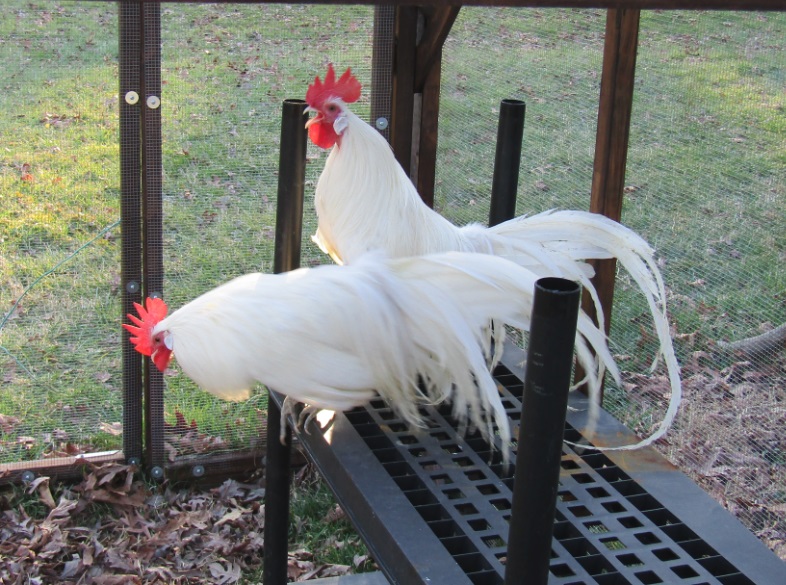
Lately I have been trying to set up my daily schedule so that I do very specific things at specific times, so that the habit gets locked in. For example one new habit is the Sunset Chicken Visit. Every day close to sunset my husband takes the dog for a walk. I use that as my cue to drop whatever I’m doing and head out to the chicken coop to deliver their food, water and snacks. This has been working really well because it’s a small enough task that I can jump up and take care of it. We’re not talking clean the entire coop — just a quick delivery!
I was trying to think of a similar habit to encourage making music every day. I really enjoy sitting at the piano while having my morning coffee (being very careful not to get coffee on the piano!!!); I enjoy playing random melodies and figuring out chords to accompany them. But since my music notation skills are still weak, when I scratch stuff down, it’s by spelling the chords out. On one sheet of notebook paper there’s the melody, the chord symbols, the chord voicing spelled out, and maybe some noteheads to indicate a rhythm. It’s hard to read.

What would be pleasant to write on? Easier to read?

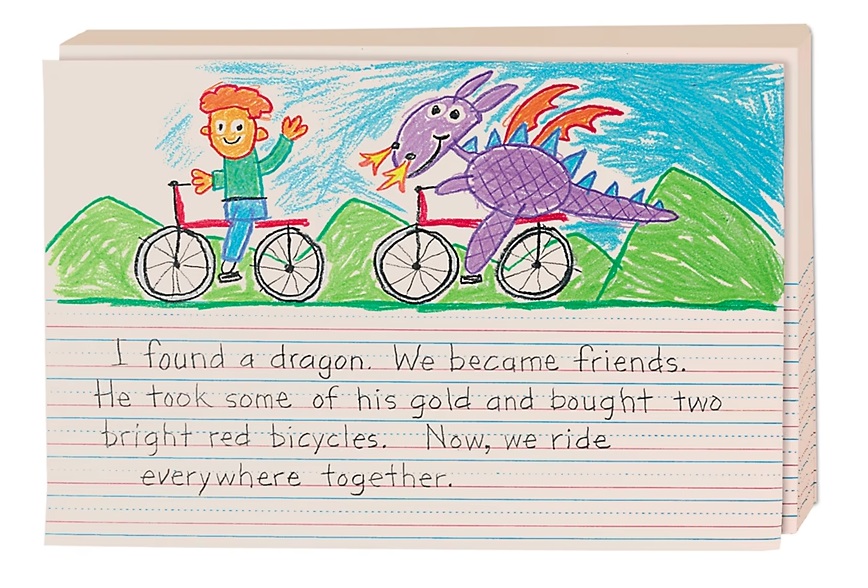
When I was in elementary school, I always liked using the giant paper that had room for a drawing at the top and writing at the bottom.

Like this paper, found here:
https://www.lakeshorelearning.com/products/language/writing-grammar/red-baseline-jumbo-picture-story-newsprint/p/TA2694/
So I got myself some fancy graph paper. The sheets are huge (11 x 17) and are bound to a stiff cardboard backing. The paper is blank on the back, and is solid enough that it stands up to lots of erasing. It sits beautifully on the piano’s music ledge. I also got some 3-ring binders that are 11 x 17 and open sideways (landscape orientation).
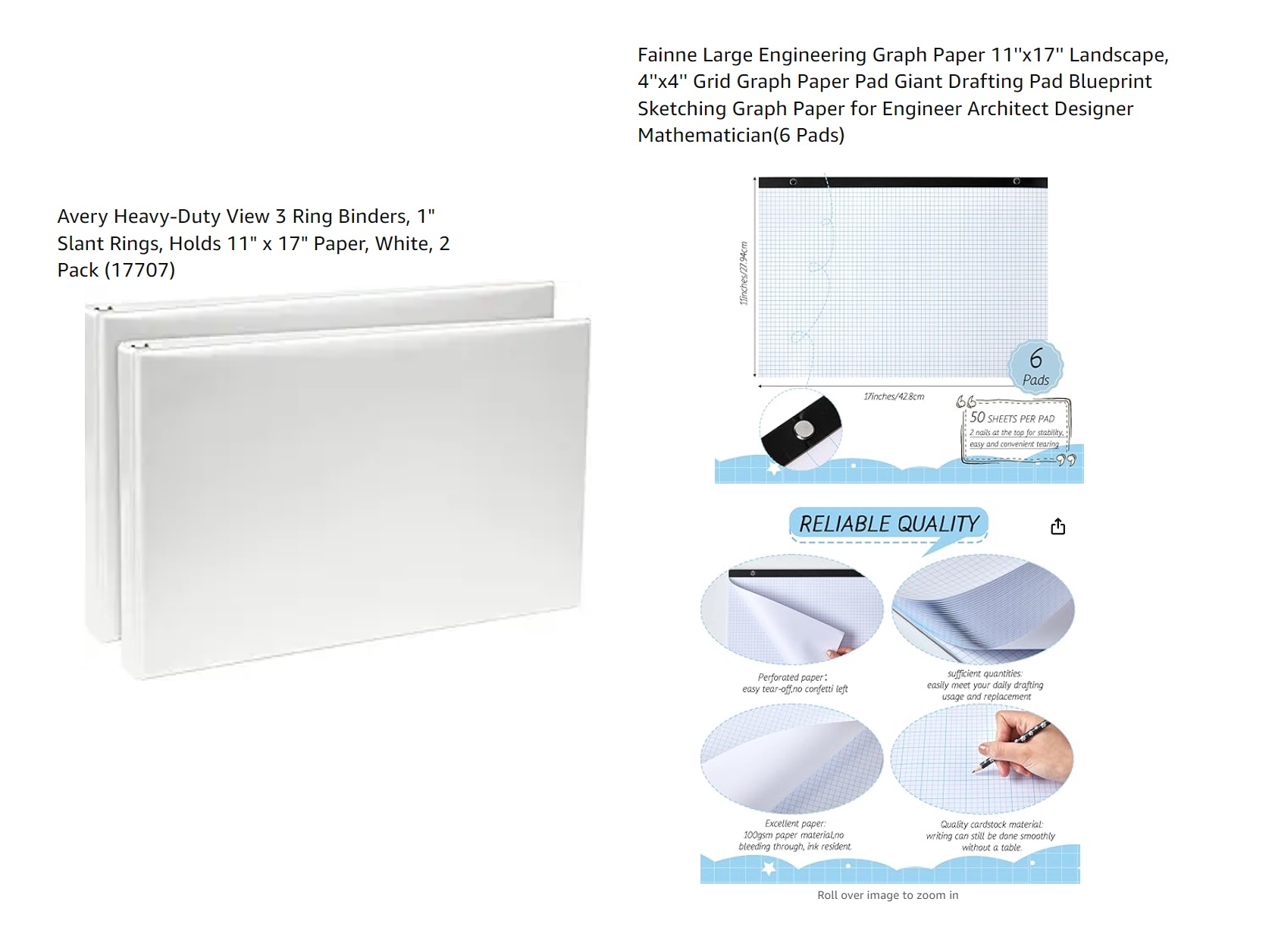
I’m not going to be taping my art to the refrigerator, so I thought this might be a good way to make a ritual out of it. Look, look!  Another sheet in the special binder!

My goal is to fill a page with ideas every morning. Noodling. Remember I write really big, like a second grader, so “filling a page” is not a lot. Yesterday’s page took two hours and today’s took an hour and 15 minutes.

I remember reading Julia Cameron’s book The Artist’s Way; she talks about making a habit of morning writing

Morning Pages are three pages of longhand, stream of consciousness writing, done first thing in the morning. *There is no wrong way to do Morning Pages*–they are not high art. They are not even “writing.” They are about anything and everything that crosses your mind– and they are for your eyes only. Morning Pages provoke, clarify, comfort, cajole, prioritize and synchronize the day at hand. Do not over-think Morning Pages: just put three pages of anything on the page…and then do three more pages tomorrow.

https://juliacameronlive.com/basic-tools/morning-pages/

So I will be doing Morning Noodle Pages!